Introduction: Demystifying the Insurance Bet for Novice Players
For those embarking on their journey into the captivating world of online blackjack, understanding the nuances of every betting option is paramount. While the primary objective remains clear – to achieve a hand total closer to 21 than the dealer’s, without exceeding it – certain side bets and strategic decisions can significantly impact your long-term success. Among these, the “Insurance Bet” often emerges as a point of confusion for beginners. Is it a safeguard or a trap? A shrewd move or a rookie mistake? This article aims to dissect the Blackjack Insurance bet, providing a comprehensive, expert-level analysis tailored for Indian players just starting their online casino adventure. As you explore the myriad of online blackjack offerings and promotions, such as those found at https://dafabetindiaofficial.com/promotions, a solid grasp of fundamental strategies like understanding insurance will prove invaluable.
Understanding the Mechanics of the Insurance Bet
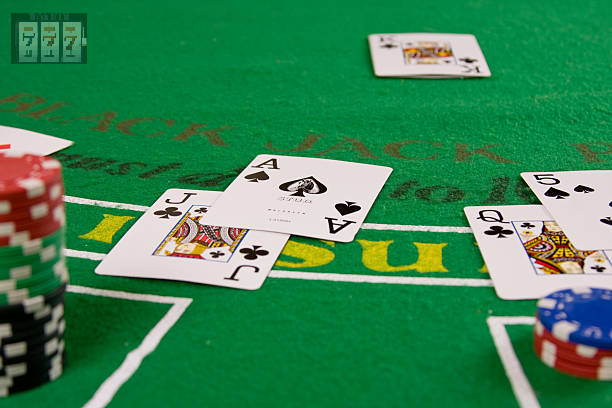
The Insurance bet in blackjack is a side bet offered to players when the dealer’s upcard is an Ace. It’s presented as a seemingly attractive proposition: a chance to protect your initial wager against the dealer having a natural blackjack (a 10-value card paired with their Ace).
When is Insurance Offered?
The moment the dealer reveals an Ace as their face-up card, the option to take insurance becomes available to all players at the table. This is before any further cards are dealt to the players or the dealer.
How Does it Work?
If you choose to take insurance, you place an additional bet, typically half the amount of your original wager, into a designated “insurance” area on the table. This is a separate bet entirely from your main hand.
The Outcome of the Insurance Bet
There are two possible scenarios after you place an insurance bet:
* **Dealer has Blackjack:** If the dealer’s face-down card is a 10-value card (10, Jack, Queen, King), completing a natural blackjack, your insurance bet pays out at 2:1 odds. In this scenario, your original hand usually loses (unless you also have a blackjack, resulting in a push). The insurance payout effectively recoups the loss of your main bet, making it feel like you “broke even” on the hand.
* **Dealer does NOT have Blackjack:** If the dealer’s face-down card is anything other than a 10-value card, your insurance bet is lost. The game then proceeds as normal, and your original hand is played out against the dealer’s hand.
The Mathematical Reality: Why Insurance is a Poor Bet
While the concept of “insurance” sounds appealing, especially when facing a potential dealer blackjack, a deeper dive into the probabilities reveals why it’s generally considered a bad bet for the player.
Probability Analysis
Let’s consider a standard 8-deck blackjack game, a common setup in online casinos. When the dealer shows an Ace, there are 13 possible card ranks that could be their downcard (A, 2, 3, 4, 5, 6, 7, 8, 9, 10, J, Q, K). Of these, four ranks (10, J, Q, K) are 10-value cards.
* **Cards in an 8-deck shoe:** 416 cards total.
* **Aces:** 32 (8 decks * 4 Aces/deck).
* **10-value cards:** 128 (8 decks * 16 10-value cards/deck).
After the dealer’s Ace is revealed, and assuming your hand doesn’t contain any 10-value cards (which would alter the probabilities slightly, but not enough to change the fundamental conclusion), the remaining cards in the shoe are:
* **Total remaining cards:** 415
* **Remaining 10-value cards:** 128
The probability of the dealer having a blackjack is therefore approximately 128/415 ≈ 30.84%.
The House Edge
Since the insurance bet pays 2:1, it implies that the probability of the dealer having a blackjack should be 1/3 (33.33%) for it to be an even bet. However, as our calculation shows, the actual probability is closer to 30.84%. This discrepancy creates a house edge on the insurance bet.
For every 3 times the dealer shows an Ace, they will have a blackjack approximately once. If you consistently take insurance:
* You win 2 units once (payout 2:1 on 1 unit bet).
* You lose 1 unit twice.
* Net result: (2 * 1) – (1 * 2) = 0. This would be a fair bet.
However, with the actual probabilities:
* Out of 415 scenarios, the dealer has blackjack 128 times (you win 2 units).
* Out of 415 scenarios, the dealer does not have blackjack 287 times (you lose 1 unit).
* Expected value for every 1 unit bet: (128/415 * 2) + (287/415 * -1) = (256 – 287) / 415 = -31 / 415 ≈ -0.0747.
This means, on average, for every ₹100 you bet on insurance, you can expect to lose approximately ₹7.47. This represents a significant house edge, making it one of the worst bets you can make in blackjack.
Exceptions and Misconceptions: When Does Insurance Seem Appealing?
While the mathematics overwhelmingly advises against taking insurance, there are specific scenarios and psychological factors that can make it seem tempting.
“Even Money” When You Have Blackjack
If you have a natural blackjack and the dealer’s upcard is an Ace, the dealer will often offer “even money.” This is essentially an insurance bet in disguise. If you take even money, you immediately receive a 1:1 payout on your blackjack, regardless of whether the dealer has a blackjack. If you decline even money and the dealer has blackjack, your hand is a push (no win, no loss). If the dealer does not have blackjack, you win 3:2 on your blackjack.
Statistically, taking “even money” is still a bad bet for the same reasons as regular insurance. You are giving up the higher 3:2 payout for a guaranteed 1:1 payout, even though the dealer is more likely *not* to have a blackjack. The only time “even money” makes sense is if you are counting cards and know there’s a very high concentration of 10-value cards remaining in the shoe. For beginners, this strategy is not applicable.
Psychological Comfort
For many beginners, the idea of “insuring” a good hand or avoiding a complete loss feels comforting. The immediate payout when the dealer hits blackjack can create a false sense of security or a belief that it’s a smart defensive move. However, this psychological comfort comes at a statistical cost.
Practical Recommendations for Beginners
Based on the expert analysis, here are clear recommendations for beginners regarding the blackjack insurance bet:
1. **Always Decline Insurance:** As a beginner, the simplest and most effective strategy is to *never* take the insurance bet. The house edge is too high, and consistently taking this bet will erode your bankroll over time.
2. **Focus on Basic Strategy:** Instead of worrying about insurance, dedicate your efforts to mastering basic blackjack strategy. This involves knowing when to hit, stand, double down, and split based on your hand and the dealer’s upcard. This is where the real edge can be gained (or losses minimized).
3. **Understand the Odds:** Develop an understanding of basic probabilities in blackjack. This will help you make informed decisions and resist the temptation of bets with a high house edge.
4. **Manage Your Bankroll:** A crucial aspect of online gambling is effective bankroll management. Avoid making emotionally driven bets like insurance, which can quickly deplete your funds.
5. **Practice in Free Play:** Before wagering real money, utilize free-play versions of online blackjack to practice basic strategy and get comfortable with the game’s flow without the pressure of financial risk.
Conclusion: A Clear Path for Prudent Play